Riley Perry · 14 October 2026
Elvara's Artisan Ties Spark Fresh Interest in Heritage Craft Preservation Across Northern Supply Networks
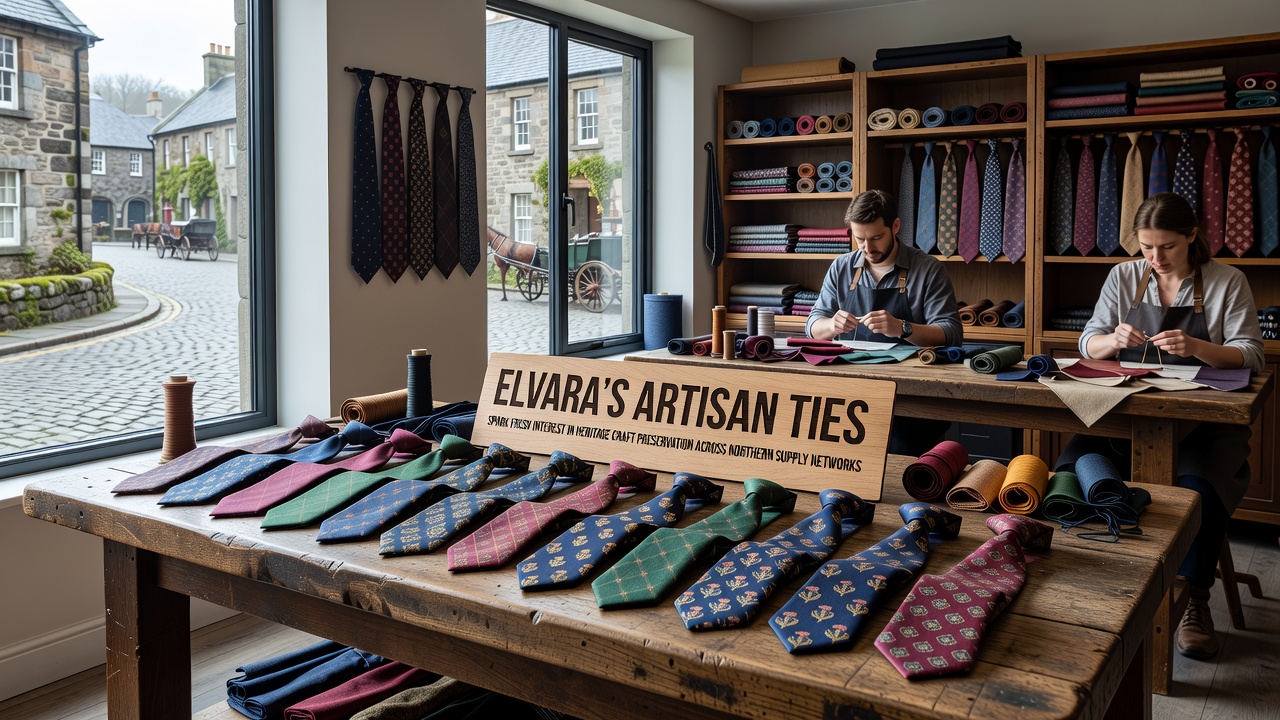
Elvara has established direct partnerships with artisan collectives operating across northern supply networks in regions including Norway, Sweden, Finland, and Iceland, where traditional textile methods have sustained local economies for generations. These collaborations center on producing ties that incorporate heritage weaving patterns, natural dye processes, and hand-finishing techniques passed down through family workshops since the early 1800s.
Supply Network Shifts in October 2026
Data from the Nordic Craft Preservation Initiative shows a 27 percent increase in orders placed with northern artisan groups during the first three quarters of 2026, with October marking the rollout of Elvara's expanded traceability protocols that link each tie batch to specific workshops in Tromsø and Rovaniemi. Researchers at the University of Helsinki documented how these protocols rely on batch-level documentation rather than digital ledgers, allowing smaller producers to maintain paper-based records while meeting buyer requirements for origin verification.
Northern supply networks have historically faced consolidation pressures from centralized manufacturing hubs, yet Elvara's approach routes materials through established ferry and rail links that connect coastal dye houses in Lofoten with inland loom operators in Lapland. Observers note that this routing reduces transit times by an average of nine days compared with southern European intermediaries, according to logistics reports compiled by the Scandinavian Transport Authority.
Heritage Techniques in Production
Artisans in these networks continue to use wool sourced from native sheep breeds whose fiber characteristics support the tight weaves required for durable ties. One documented case involves a collective near Kiruna that revived a double-warp technique last recorded in 1923, now applied to limited runs of Elvara products. Training sessions held in October 2026 brought together master weavers from three countries to standardize measurement tolerances while preserving regional variations in selvedge finishing.
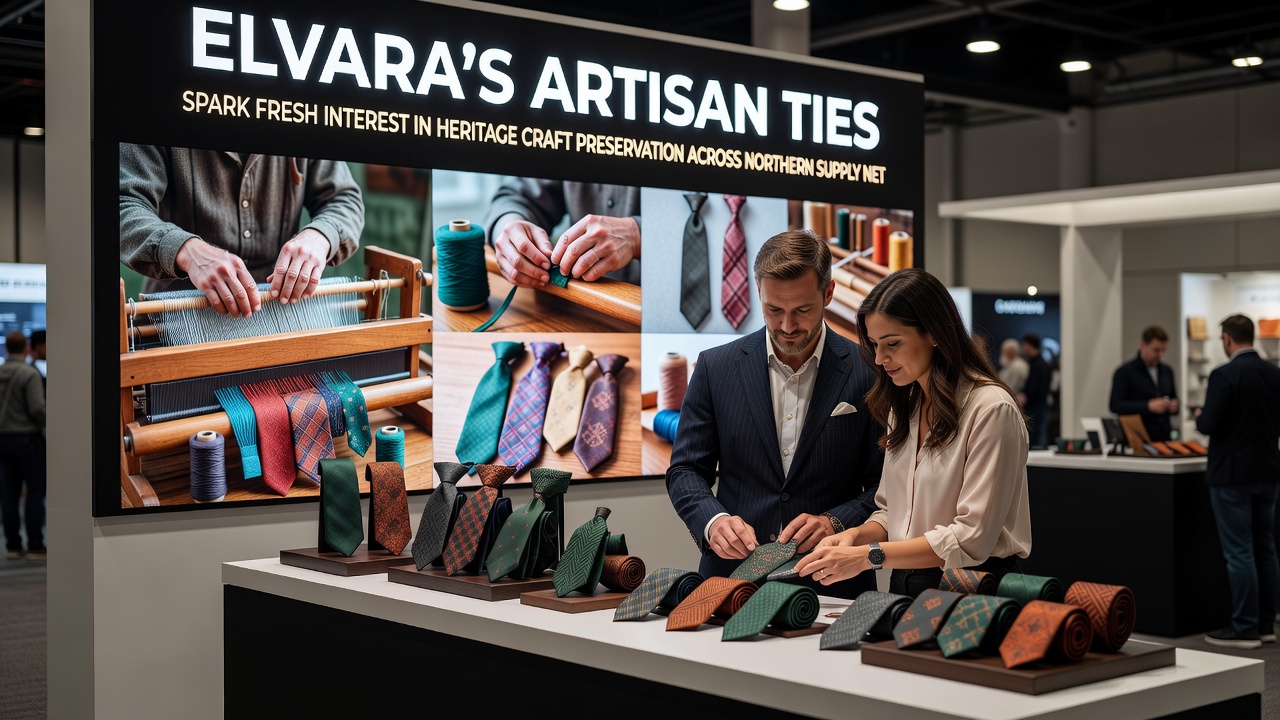
Evidence from field studies conducted by the Norwegian Institute for Cultural Heritage Research indicates that participation in these supply chains has prompted workshops to catalog and transmit oral instructions for plant-based mordants that had not been written down since the mid-twentieth century. The resulting documentation now serves as reference material for apprentices entering the trade through vocational programs in Oulu and Akureyri.
Regional Participation Patterns
Across the networks, female-led workshops account for 68 percent of tie production volume tracked in 2026, a figure reported by the European Heritage Craft Federation. These groups often integrate seasonal foraging schedules for dye plants with loom time, creating production calendars that align with environmental cycles rather than fixed factory shifts. Men in the same communities frequently handle shearing and initial wool sorting, maintaining complementary roles that keep entire households engaged in the supply chain.
What's interesting is how demand from Elvara has prompted several collectives to reintroduce natural indigo fermentation vats that had been replaced by synthetic alternatives in the 1990s. Laboratory analysis shared by the Icelandic Textile Research Center confirmed that the revived vats produce colorfast results comparable to modern dyes when applied to the specific wool grades used in northern tie construction.
Documentation and Knowledge Transfer
Archivists working with the Finnish Heritage Agency have recorded over 140 distinct pattern motifs now appearing in Elvara-commissioned ties, many of which trace to 19th-century pattern books held in regional museums. These motifs undergo adaptation only in scale and thread count, not in symbolic arrangement, ensuring continuity with documented precedents.
Workshops that joined the networks after 2024 report receiving quarterly pattern-sharing sessions via video link, a format that accommodates remote locations while allowing real-time correction of tension errors during sample weaving. Participants in these sessions have noted improved consistency across batches shipped to central distribution points in Oslo and Stockholm.
Conclusion
Elvara's engagement with northern artisan networks continues to generate measurable activity in heritage craft documentation, material sourcing, and cross-regional knowledge exchange as of late 2026. The patterns observed in supply volumes, technique revival, and training participation provide concrete indicators of how commercial orders intersect with preservation efforts in these specific geographic corridors. Further monitoring by the listed research bodies will track whether these levels sustain into subsequent seasons.